


The Ultimate Guide to Pet Nutrition: What Every Pet Parent Should Know About Healthy Diets
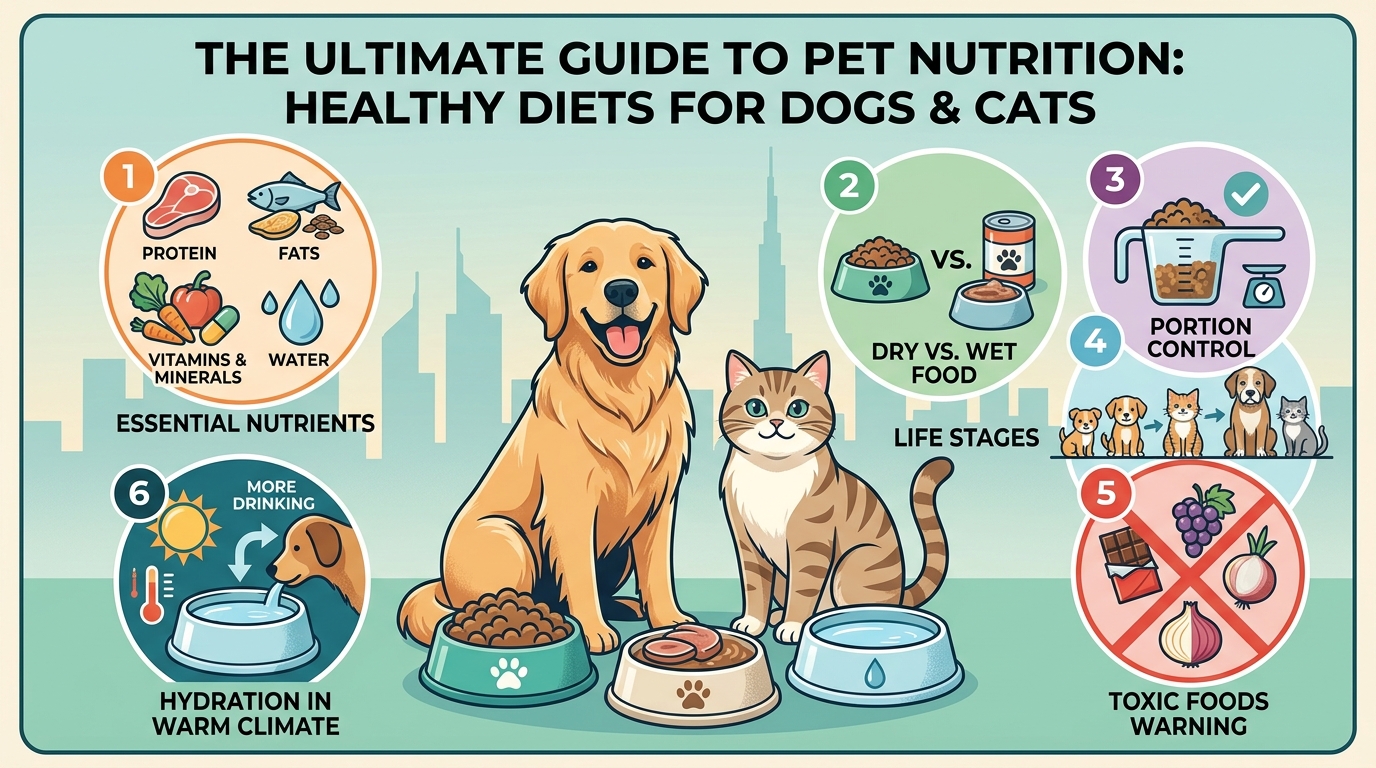
Good nutrition is one of the foundations of a healthy, active and happy pet. The right diet supports growth, muscle development, digestion, healthy skin, a strong immune system and healthy ageing. However, with so many pet food brands, ingredients, feeding trends and online recommendations, choosing what to feed your dog or cat can feel confusing.
A healthy diet is not necessarily the most expensive food or the one with the most attractive packaging. It is a diet that provides the right nutrients, in appropriate quantities, for your pet’s age, size, activity level and health.
This guide explains the basics of pet nutrition and how to make informed feeding decisions.
1. Why Is Good Nutrition Important?
Dogs and cats need a balanced combination of nutrients to maintain their health.
A suitable diet helps to:
- Support normal growth and development
- Maintain healthy muscles and bones
- Support digestion and regular bowel movements
- Maintain healthy skin and coat
- Provide energy for everyday activity
- Support immune system function
- Maintain a healthy body weight
- Support different life stages, from puppyhood and kittenhood to old age
Poor nutrition, overfeeding or an unsuitable diet can contribute to problems such as obesity, nutrient deficiencies and digestive disturbances. Nutritional needs can also change when a pet develops a medical condition.
The World Small Animal Veterinary Association (WSAVA) recommends that nutrition should be considered as part of routine veterinary care, rather than treated as a separate issue. Its Global Nutrition Guidelines provide resources for assessing a pet’s diet and body condition.
2. Understanding the Essential Nutrients
Dogs and cats need several important nutrients. The quantities and proportions differ between species and individual animals.
Protein
Protein provides amino acids required for muscle development, tissue repair, growth and normal body functions. Animal-based ingredients are important sources of protein in many pet foods. Cats have particularly high dietary protein requirements and specific needs for nutrients such as taurine.
Fats
Dietary fats provide concentrated energy and essential fatty acids. They also support healthy skin, coat condition and the absorption of certain vitamins.
Carbohydrates
Carbohydrates can provide energy and dietary fibre. Dogs and cats digest different carbohydrate sources to varying degrees, depending on preparation and formulation. They do not need a particular carbohydrate ingredient simply because it appears on a food label.
Vitamins and minerals
Vitamins and minerals support many functions, including bone development, nerve function, metabolism and immune health. Both deficiencies and excessive supplementation can be harmful.
Water
Fresh water is essential. It supports digestion, circulation, temperature regulation and normal organ function. Always provide clean drinking water and refresh it regularly.
3. Do Dogs and Cats Need Different Diets?
Yes. Although dogs and cats share some nutritional requirements, they should not be fed as if they have identical dietary needs.
Dog nutrition
Dogs are adaptable eaters and can obtain nutrients from a properly formulated diet containing a range of ingredients. A complete and balanced commercial dog food can provide the nutrients required for the relevant life stage.
The appropriate food depends on factors such as:
- Age and growth stage
- Breed and expected adult size
- Activity level
- Body condition
- Neutering status
- Medical history
A highly active dog may have different energy needs from a small companion dog that spends most of the day indoors.
Cat nutrition
Cats are obligate carnivores. They have specific nutritional requirements that make a properly formulated cat diet essential.
For example, cats need nutrients such as taurine and preformed vitamin A in their diet. A food designed for dogs should not be used as a cat’s regular diet.
Cats may also benefit from moisture-rich food as part of an overall hydration plan. Wet food can contribute to daily water intake, although the right feeding arrangement should be discussed with a veterinarian.
Read more from Cornell University’s Feline Health Center.
4. Choosing the Right Pet Food
Pet food packaging can contain many claims, but the most important consideration is whether the product is nutritionally suitable for your pet.
Look for a food that:
- Is specifically formulated for dogs or cats, as appropriate
- Is described as complete and balanced for the relevant life stage
- Comes from a manufacturer with appropriate quality-control and nutritional expertise
- Provides clear feeding guidance
- Is suitable for your pet’s health and dietary requirements
A food labelled for intermittent or complementary feeding may not provide everything required as a pet’s sole diet.
The ingredient list is useful, but it does not tell the entire story about nutritional quality. The formulation, nutrient levels, digestibility, manufacturing controls and suitability for the individual animal also matter.
If you are unsure, ask your veterinarian to review the food and feeding quantity.
5. Dry Food, Wet Food or a Combination?
Both dry and wet food can form part of a healthy diet when appropriately formulated.
| Food type | Potential advantages | Considerations |
|---|---|---|
| Dry food | Convenient to store and measure; easy to use in some feeding toys | Contains less moisture than wet food |
| Wet food | Provides additional dietary moisture; often has a different texture and aroma | Requires appropriate storage after opening |
| Combination feeding | Can provide variety in texture and moisture | Portions and total calories must be managed |
There is no universal rule that every pet should eat only dry food or only wet food. The best choice depends on your pet’s nutritional requirements, preferences, health and feeding routine.
6. Feeding According to Your Pet’s Age
Nutritional requirements change throughout a pet’s life.
Puppies and kittens
Young animals need diets formulated for growth. Their nutritional needs are different from those of adults, and feeding amounts should be adjusted as they develop.
Adult dogs and cats
Adult pets generally need a diet that maintains a healthy body condition and supports their activity level. Portion control is important, particularly for pets that spend most of their time indoors.
Senior pets
Older animals may experience changes in activity, muscle mass, digestion and health. Some may need a different calorie intake or a therapeutic diet for a diagnosed condition. Age alone does not determine which food is appropriate.
7. How Much Should You Feed Your Pet?
Overfeeding is one of the most common nutritional mistakes made by pet owners.
Pet food packaging usually provides a starting feeding guide, but the correct amount depends on the individual animal. Two dogs of the same breed and weight may have different energy requirements.
For better portion control:
- Follow the food manufacturer’s feeding guidance as a starting point.
- Use a measuring cup or kitchen scale rather than estimating portions.
- Include treats, snacks and table food in the daily calorie total.
- Monitor your pet’s weight and body condition.
- Adjust the feeding plan with veterinary guidance.
The WSAVA provides body condition scoring tools to help veterinary teams assess whether a dog or cat is underweight, overweight or at an appropriate body condition.
8. Treats, Snacks and Human Food
Treats are useful for training, rewards and bonding, but they should not replace a balanced diet.
A commonly used guideline is to keep treats and other extras to no more than around 10% of daily calories, unless your veterinarian recommends a different plan.
Avoid giving pets food simply because it is safe for humans. Some everyday foods can be dangerous to animals.
Examples of foods to keep away from pets include:
- Chocolate
- Grapes and raisins
- Onions and garlic
- Products containing xylitol
- Alcohol
- Caffeinated drinks
- Macadamia nuts, particularly for dogs
- Cooked bones that can splinter
The risks can differ between dogs and cats, and the amount consumed matters. If your pet eats a potentially toxic food, contact a veterinarian promptly rather than waiting for symptoms.
9. Is Homemade or Raw Pet Food Better?
Homemade diets can appeal to owners who want greater control over ingredients. However, preparing a nutritionally complete diet for a dog or cat is more complicated than combining meat, vegetables and grains.
An unbalanced homemade diet can lack essential nutrients or contain them in incorrect proportions. If you want to prepare your pet’s food at home, work with a veterinarian or a board-certified veterinary nutrition specialist who can formulate an appropriate recipe.
Raw diets also require careful consideration. They can expose pets and people to harmful bacteria and may contain nutritional imbalances or physical hazards. Freezing or handling raw ingredients does not guarantee that pathogens are eliminated.
Discuss the risks and alternatives with your veterinarian before changing to a raw or homemade feeding plan.
10. Pet Nutrition in Dubai’s Climate
Dubai‘s hot climate makes access to fresh water particularly important.
Practical steps include:
- Keep fresh water available throughout the day.
- Place additional water bowls around the home where appropriate.
- Avoid leaving food in direct sunlight or in hot environments.
- Follow storage instructions on dry and wet food packaging.
- Refrigerate opened wet food as directed by the manufacturer.
- Avoid leaving wet food exposed for extended periods.
- Monitor appetite and drinking habits, especially during hot weather.
Never leave a pet in a parked vehicle, even for a short period.
11. Signs Your Pet’s Diet May Need Reviewing
Your pet’s diet may need attention if you notice:
- Unexpected weight gain or loss
- Persistent digestive problems
- Changes in stool consistency
- Dull coat or skin problems
- Reduced energy
- Changes in appetite
- Difficulty maintaining muscle condition
These signs can also indicate an underlying medical problem. Do not assume that changing food alone will resolve them. Arrange a veterinary assessment, especially if symptoms are persistent or severe.
12. Building a Healthy Feeding Routine
A consistent feeding routine makes it easier to monitor your pet’s health.
- Feed appropriate portions at consistent times.
- Measure food rather than guessing.
- Keep treats under control.
- Provide fresh water.
- Store food correctly.
- Introduce necessary diet changes gradually, following veterinary advice.
- Monitor body weight and condition.
- Review nutrition during routine veterinary visits.
Frequently Asked Questions
What is the healthiest food for dogs?
The healthiest food is a complete and balanced dog food that meets your dog’s life-stage requirements and suits its individual health, activity and body condition.
Can cats eat dog food?
Dog food should not be used as a cat’s regular diet. Cats have specific nutritional requirements that dog food may not meet.
Is wet food better than dry food?
Neither is automatically better for every pet. Both can be suitable when nutritionally complete and appropriate for the animal.
How often should I feed my pet?
Feeding frequency depends on age, health, lifestyle and the type of food. Puppies and kittens generally need more frequent meals than many healthy adult pets. Your veterinarian can recommend a suitable routine.
Should I give my pet supplements?
Not automatically. A complete and balanced diet may already provide the nutrients your pet needs. Supplements can be unnecessary or harmful if used incorrectly. Ask your veterinarian before adding them.
How do I know if my pet is overweight?
Look for changes in waist definition, abdominal shape and the ability to feel the ribs without excessive pressure. Your veterinarian can assess body condition and recommend a healthy target weight.
Final Thoughts
Healthy pet nutrition is about more than choosing a popular brand. It involves selecting a suitable diet, controlling portions, providing fresh water and reviewing nutritional needs as your pet grows and ages.
When in doubt, seek advice from a qualified veterinarian. A feeding plan tailored to your dog or cat is more valuable than following generic diet trends.
Contributed by GuestPosts.biz