


5 Common Pet Health Problems and How to Prevent Them
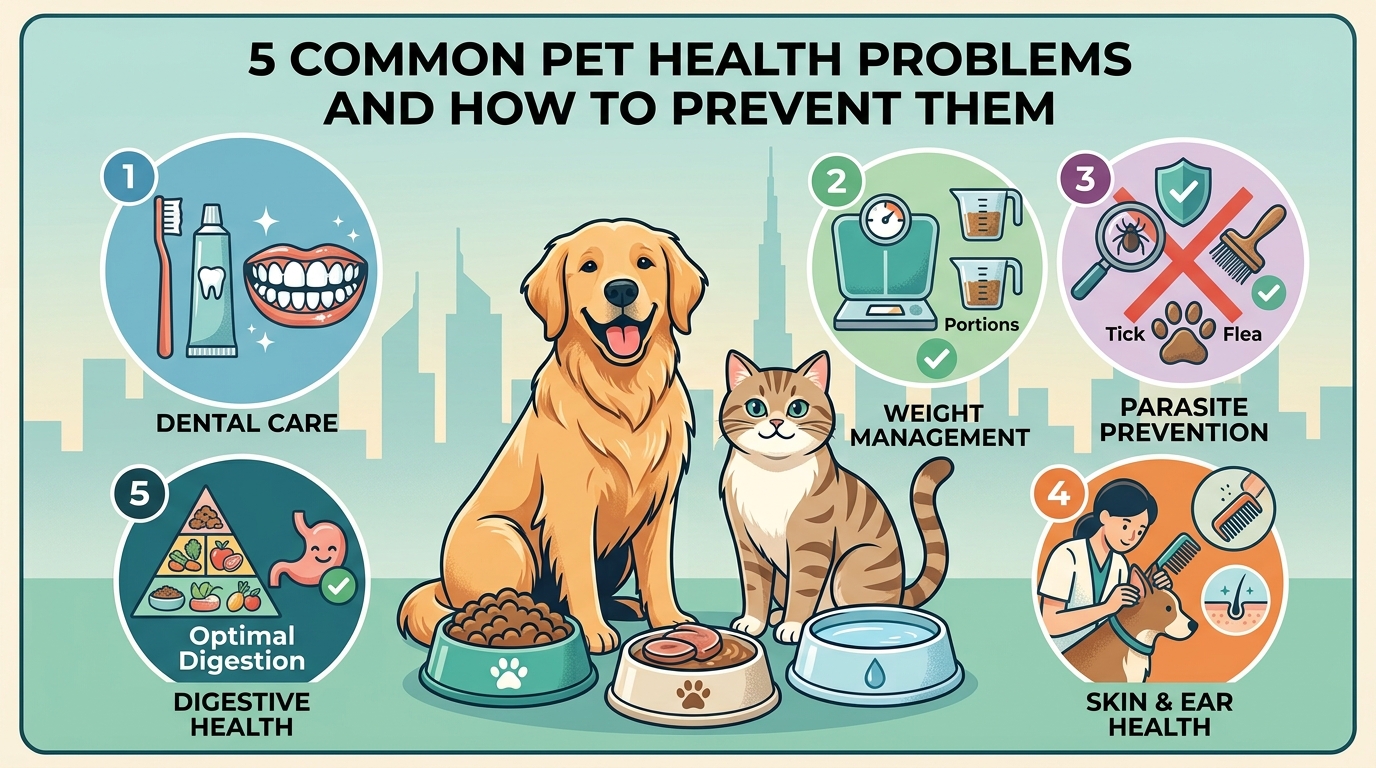
Dogs and cats bring companionship, fun and affection into our homes. Keeping them healthy, however, requires more than occasional veterinary visits. Everyday habits such as dental care, balanced nutrition, parasite prevention, exercise and regular health checks can make a significant difference to their wellbeing.
Some pet health problems develop gradually, while others can appear suddenly. Knowing what to look for helps owners seek veterinary advice early and avoid preventable complications.
Here are five common health concerns affecting dogs and cats, together with practical steps to help reduce the risks.
1. Dental Disease
Dental disease is a common problem in both dogs and cats. Plaque can accumulate on teeth and contribute to gum inflammation, periodontal disease, discomfort and tooth loss.
Cats may also develop painful dental conditions that are difficult for owners to identify without an examination.
Signs to watch for
- Bad breath
- Red or swollen gums
- Yellow or brown deposits on teeth
- Drooling
- Pawing at the mouth
- Chewing on one side
- Dropping food
- Reduced appetite or reluctance to eat
Some pets continue eating despite dental pain, so a normal appetite does not necessarily mean their teeth are healthy.
How to help prevent dental problems
Brush regularly: Introduce a toothbrush and toothpaste specifically designed for pets. Never use ordinary human toothpaste.
Arrange dental checks: Ask your veterinarian to examine your pet’s teeth and gums during routine visits.
Use suitable dental products: Veterinary-approved dental diets, chews and other products may help, but their suitability varies. Look for products with recognised dental-health evidence and ask your veterinarian for advice.
Do not ignore bad breath: Persistent bad breath can be a sign of dental disease and should be checked.
Professional cleaning may be required when dental disease has developed. Home brushing is preventive care, not a substitute for treatment.
2. Obesity and Weight-Related Problems
Excess weight is a significant health concern for household pets. Dogs and cats can gain weight when they consume more calories than they use through activity and normal body functions.
Obesity can increase the risk of health problems, including joint strain, reduced mobility and certain metabolic conditions.
Signs to watch for
- Difficulty feeling the ribs beneath body fat
- Loss of a visible waistline
- Reduced interest in exercise
- Difficulty jumping or climbing
- Heavy breathing during activity
- Gradual weight gain
How to help prevent obesity
Measure food portions: Avoid estimating meals by eye. Use a measuring cup or kitchen scale.
Control treats: Treats, table scraps and snacks all contribute to daily calorie intake.
Encourage suitable activity: Dogs need regular walks and play, while cats benefit from interactive play and opportunities to climb and explore.
Monitor weight: Weigh your pet regularly and discuss unexpected changes with your veterinarian.
Choose food for the right life stage: A puppy, adult dog, kitten and senior cat may have very different nutritional needs.
Avoid crash diets or sudden reductions in food. A veterinarian can recommend a safe weight-management plan.
3. Fleas, Ticks and Internal Parasites
External and internal parasites can affect pets throughout the year. Fleas can cause itching and skin irritation, while ticks may transmit diseases. Internal parasites, including intestinal worms, can affect digestion and general health.
In Dubai and the wider UAE, warm conditions make it important to discuss an appropriate parasite-prevention routine with your veterinarian.
Signs to watch for
- Frequent scratching or biting at the skin
- Redness, irritation or hair loss
- Visible fleas or flea dirt
- Ticks attached to the skin
- Changes in appetite
- Vomiting or diarrhoea
- Weight loss or a swollen abdomen in some cases
Some pets may carry parasites without showing obvious symptoms.
How to help prevent parasite problems
Use veterinary-recommended prevention: Your veterinarian can recommend products appropriate for your pet’s species, age, weight and lifestyle.
Keep to the schedule: Parasite prevention needs to be used according to the product instructions and your veterinarian’s advice.
Check your pet’s coat: Look for fleas, ticks, skin irritation and unusual changes during grooming.
Maintain clean surroundings: Wash bedding regularly and keep indoor and outdoor areas clean.
Arrange parasite testing: Your veterinarian may recommend faecal testing or other checks depending on your pet’s lifestyle and risk.
Never use a dog flea or tick product on a cat unless the product is specifically labelled as safe for cats. Some ingredients used in dog products can be highly toxic to cats.
4. Skin Conditions, Allergies and Ear Infections
Skin irritation and ear problems are common reasons for veterinary consultations. Causes can include parasites, allergies, infections, moisture, foreign material and other medical conditions.
Dogs with floppy ears or pets that frequently swim may be more prone to certain ear problems, but any dog or cat can develop them.
Signs to watch for
- Persistent scratching
- Excessive licking or chewing
- Red or inflamed skin
- Hair loss
- Recurrent skin sores
- Head shaking
- Scratching around the ears
- Unusual ear discharge or smell
These symptoms can have several different causes. Repeatedly treating the symptoms without identifying the underlying problem may delay effective care.
How to help prevent skin and ear problems
Keep grooming consistent: Brush your pet according to its coat type and inspect the skin regularly.
Use suitable products: Choose pet-specific shampoos and grooming products. Avoid frequent bathing unless recommended.
Keep ears appropriately clean and dry: Ask your veterinarian whether your pet needs routine ear cleaning and which product to use. Do not insert cotton buds or other objects deep into the ear canal.
Address parasites: Fleas and other parasites can trigger or worsen skin irritation.
Seek advice for recurring problems: Repeated itching or ear infections need a veterinary assessment rather than repeated use of over-the-counter products.
5. Digestive Problems
Vomiting, diarrhoea, constipation and changes in appetite can affect dogs and cats. Sometimes the cause is a temporary dietary disturbance, but digestive symptoms can also be linked to infection, parasites, toxins, foreign objects or underlying disease.
Signs to watch for
- Vomiting
- Diarrhoea
- Constipation or straining
- Reduced appetite
- Abdominal discomfort
- Unusual stool colour or consistency
- Lethargy
- Changes in drinking habits
How to help prevent digestive problems
Provide a consistent diet: Avoid frequent, unnecessary changes to food.
Introduce new food gradually: Follow veterinary advice when changing diets, particularly if your pet has a sensitive digestive system.
Avoid unsafe foods: Keep toxic human foods, rubbish and unsuitable table scraps away from pets.
Keep fresh water available: Good access to clean water supports normal hydration.
Prevent access to foreign objects: Keep small toys, packaging, bones and other objects that could be swallowed out of reach.
Repeated vomiting, persistent diarrhoea, blood in the stool, abdominal pain or a sudden loss of appetite should be assessed by a veterinarian. Do not give human medicines to your pet unless specifically instructed by a veterinarian.
Preventive Care: What Every Pet Owner Should Do
Many health problems can be detected earlier or reduced through a consistent preventive-care routine.
Routine veterinary examinations
Arrange regular health checks even when your pet appears healthy. The frequency depends on age, medical history and lifestyle. Puppies, kittens, senior pets and animals with ongoing conditions may need more frequent visits.
Vaccinations
Keep vaccinations up to date according to your veterinarian’s recommendations. The appropriate schedule depends on your pet’s age, vaccination history, lifestyle and local disease risks.
Parasite prevention
Discuss a suitable flea, tick and internal parasite prevention plan. Do not assume one product or schedule is appropriate for every pet.
Dental hygiene
Start a manageable dental-care routine and have your pet’s mouth checked regularly.
Healthy weight and exercise
Provide appropriate food portions and daily activity suited to your pet’s age, breed and physical condition.
Grooming and hygiene
Regularly inspect the coat, skin, ears, eyes, paws and nails. Grooming can help you notice changes that might otherwise go undetected.
When Should You Contact a Veterinarian?
Some symptoms require urgent veterinary attention. Seek immediate professional advice if your pet experiences:
- Difficulty breathing
- Collapse, seizures or severe weakness
- Suspected poisoning
- Severe bleeding or serious injury
- A swollen abdomen with repeated unsuccessful attempts to vomit
- Inability to urinate, particularly in a cat
- Severe or repeated vomiting
- Sudden inability to walk or significant pain
Do not wait for a routine appointment if your pet appears seriously unwell.
Frequently Asked Questions
How often should my dog or cat visit the veterinarian?
Healthy adult pets commonly benefit from at least annual wellness examinations, but the right frequency depends on age, health and lifestyle. Senior pets or animals with chronic conditions may need checks more often.
What are the most common preventable pet health problems?
Dental disease, obesity and parasite-related problems are important areas for preventive care. Skin, ear and digestive problems also benefit from early assessment and appropriate routine care.
Can indoor cats get parasites?
Yes. Indoor cats can still be exposed to parasites through several routes. Ask your veterinarian to assess the risks and recommend an appropriate prevention plan.
Should I brush my pet’s teeth every day?
Regular brushing with pet-specific products is a useful preventive habit. Introduce it gradually and ask your veterinarian for advice if your pet has existing dental problems.
Can I give my pet human medication?
Do not give human medication unless a veterinarian specifically instructs you to. Some common medicines can be dangerous or toxic to animals.
Final Thoughts
Preventive care is one of the most valuable responsibilities of pet ownership. Regular veterinary examinations, appropriate vaccinations, parasite control, dental hygiene, good nutrition and weight management all contribute to a healthier life.
Pay attention to changes in your pet’s behaviour, appetite, mobility and appearance. When something seems unusual, seek veterinary advice early rather than waiting for the problem to become more serious.
Contributed by GuestPosts.biz