


Tips for Grooming Pets: A Complete Guide to Keeping Dogs and Cats Healthy
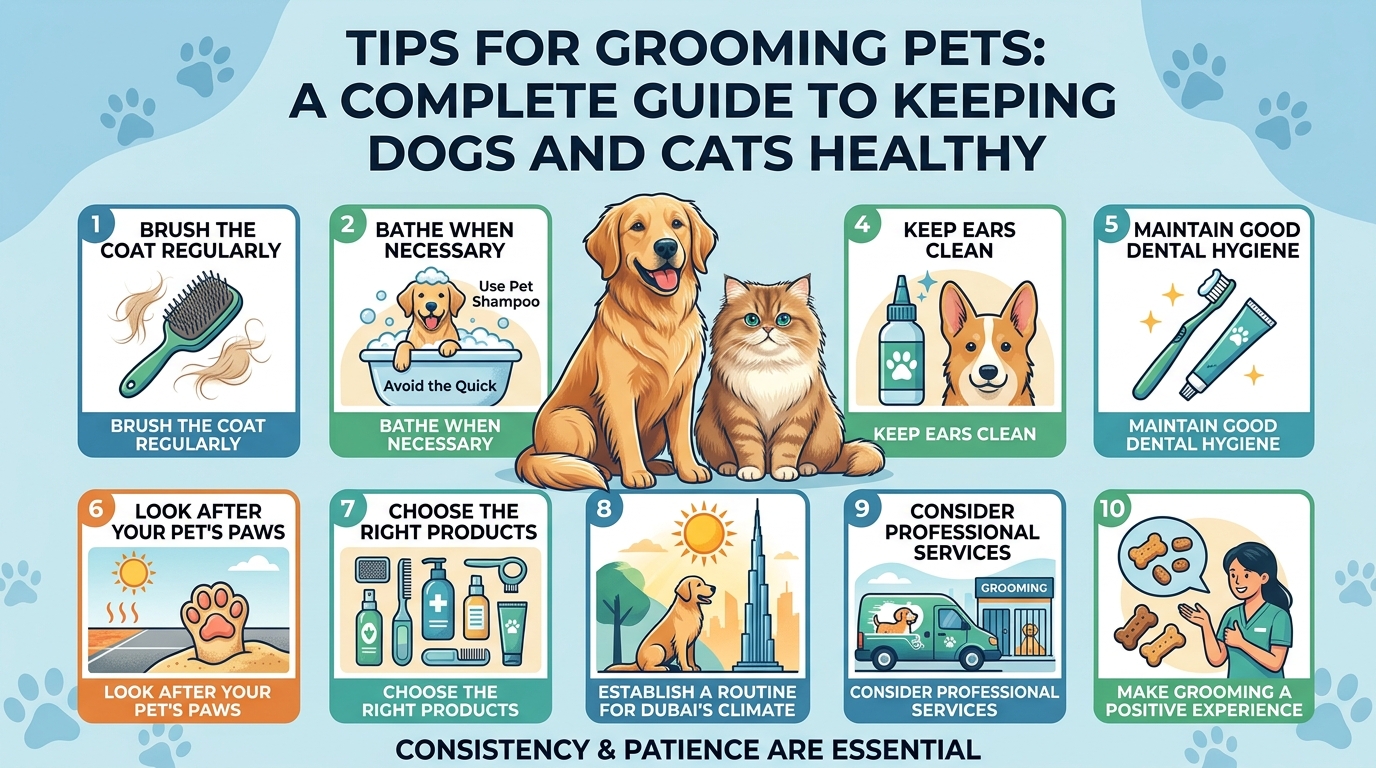
Pet grooming is an essential part of responsible pet ownership. Regular grooming helps keep animals clean, comfortable and healthy while providing an opportunity to identify potential skin, coat and hygiene problems.
Whether you own a dog or a cat, establishing a consistent grooming routine can make a significant difference to your pet’s wellbeing.
In Dubai, grooming is particularly important because of the hot climate, dust and frequent exposure to outdoor environments. Pets may need additional attention to their paws, coats and general hygiene, depending on their breed and lifestyle.
Here are some practical pet grooming tips to help keep your furry companions looking and feeling their best.
1. Brush Your Pet’s Coat Regularly
Brushing is one of the most important parts of pet grooming. It removes loose hair, dirt and debris while helping prevent tangles and painful mats.
Different breeds have different grooming requirements.
- Short-haired dogs: Usually benefit from brushing once or twice a week.
- Long-haired dogs: May require daily brushing to prevent tangles.
- Curly-coated dogs: Need regular brushing and professional coat maintenance.
- Long-haired cats: Often require frequent brushing to prevent matting.
- Short-haired cats: Generally need less frequent brushing.
Use a brush or comb suitable for your pet’s coat type. Be gentle, particularly around sensitive areas such as the belly, ears and legs.
If you discover tightly matted fur, avoid pulling or cutting it out with scissors. A professional groomer or veterinarian can remove severe mats safely.
2. Bathe Your Pet When Necessary
Bathing helps remove dirt, excess oils and unpleasant odours.
However, pets should not be bathed excessively because frequent washing can affect the natural oils that protect their skin and coat.
Some useful bathing tips include:
- Use shampoo specifically formulated for your pet’s species.
- Brush your pet before bathing.
- Use lukewarm water.
- Avoid getting shampoo into the eyes and ears.
- Rinse thoroughly to remove all shampoo residue.
- Dry your pet properly after bathing.
The frequency of bathing depends on the breed, coat condition, lifestyle and any medical requirements.
Dogs that spend considerable time outdoors may need more frequent baths than indoor pets. Cats generally groom themselves and do not usually require routine bathing unless there is a specific reason.
3. Pay Attention to Nail Trimming
Overgrown nails can cause discomfort and affect the way your pet walks.
Regularly inspect your pet’s nails and trim them when necessary.
Signs that your dog’s nails may need trimming include:
- Nails clicking against hard floors.
- Nails touching the ground when standing.
- Nails becoming curved or excessively long.
- Difficulty walking comfortably.
Cats also need regular nail checks, although scratching posts can help maintain their claws.
Always use appropriate pet nail clippers and avoid cutting too close to the quick, which contains blood vessels and nerves.
If you are unsure how to trim your pet’s nails, ask a professional groomer or veterinarian to demonstrate the correct technique.
4. Keep Your Pet’s Ears Clean
Ear hygiene is another important aspect of grooming.
Some breeds, particularly dogs with floppy ears or hairy ear canals, may be more prone to ear problems.
Check your pet’s ears regularly for:
- Unusual odours.
- Excessive wax.
- Redness or swelling.
- Discharge.
- Frequent scratching or head shaking.
Use a veterinary-approved ear-cleaning product when cleaning is recommended.
Never insert cotton buds or other objects deep into your pet’s ear canal.
If you notice redness, pain, discharge or an unpleasant smell, consult your veterinarian rather than attempting to treat the problem yourself.
5. Maintain Good Dental Hygiene
Dental care is often overlooked in pet grooming routines.
However, poor oral hygiene can contribute to plaque, tartar buildup, gum disease and other health problems.
To support your pet’s dental health:
- Brush their teeth using a pet-specific toothbrush.
- Use toothpaste formulated for animals.
- Introduce brushing gradually.
- Provide veterinarian-approved dental products where appropriate.
- Schedule professional dental examinations when recommended.
Never use ordinary human toothpaste on dogs or cats, as some ingredients can be harmful to animals.
6. Look After Your Pet’s Paws
Paw care is especially important in Dubai.
During warmer months, pavements and outdoor surfaces can become extremely hot, potentially causing burns and discomfort.
Follow these precautions:
- Avoid walking dogs during the hottest parts of the day.
- Choose shaded routes and cooler walking times.
- Check paws after outdoor activities.
- Remove sand, dirt and debris between the paw pads.
- Look for cracks, cuts, swelling or irritation.
- Keep the hair between paw pads appropriately maintained.
If your pet shows signs of paw burns, limping or persistent discomfort, seek veterinary attention.
7. Choose the Right Grooming Products
Using appropriate grooming products helps protect your pet’s skin and coat.
Some useful grooming essentials include:
| Product | Purpose |
|---|---|
| Pet brush | Removes loose hair and tangles |
| Grooming comb | Helps maintain long coats |
| Pet shampoo | Cleans the skin and coat |
| Nail clippers | Maintains healthy nail length |
| Ear cleaner | Supports ear hygiene when needed |
| Pet toothbrush | Helps maintain dental health |
| Microfibre towel | Helps dry the coat |
| Grooming wipes | Cleans minor dirt between baths |
Always select products appropriate for your pet’s species, breed and skin condition.
Avoid using human beauty products or strongly fragranced products that may irritate animal skin.
8. Establish a Grooming Routine for Dubai’s Climate
Dubai’s weather creates some additional grooming considerations.
Hot temperatures, dust and outdoor activities can affect pets differently depending on their breed and coat type.
Consider these recommendations:
Brush more frequently when needed: Outdoor activities and seasonal shedding may increase the amount of loose hair in your pet’s coat.
Keep the coat clean: Check for dust, sand and debris after walks and outdoor activities.
Avoid unnecessary shaving: A dog’s coat can provide insulation and protection. Shaving double-coated breeds can interfere with their natural coat function. Consult a professional groomer or veterinarian before making significant changes to the coat.
Provide fresh drinking water: Hydration is important, particularly after outdoor activities.
Watch for overheating: Excessive panting, weakness, drooling, vomiting or collapse can indicate heatstroke. Move the animal to a cooler environment and seek emergency veterinary assistance.
Never leave pets in parked vehicles: Temperatures inside vehicles can rise dangerously quickly, even when the weather seems relatively mild.
9. Consider Professional Pet Grooming Services
Although basic grooming can be performed at home, professional grooming services can be useful for maintaining your pet’s coat and hygiene.
Professional groomers can provide:
- Breed-appropriate haircuts.
- Professional bathing and drying.
- Coat detangling.
- Nail trimming.
- Ear and paw care.
- De-shedding treatments.
Dubai has a variety of grooming options, including traditional salons, mobile grooming vans and specialist pet care facilities.
When selecting a grooming provider, look for experienced staff, clean facilities, suitable equipment and positive customer feedback.
Make sure the groomer understands your pet’s breed, temperament and any special requirements.
10. Make Grooming a Positive Experience
Some pets enjoy grooming, while others may become anxious or uncomfortable.
The best approach is to introduce grooming gradually and make it a positive experience.
A few practical suggestions:
- Start with short grooming sessions.
- Allow your pet to become familiar with the brushes and equipment.
- Use treats and positive reinforcement.
- Avoid forcing your pet to remain still.
- Take breaks when your pet becomes uncomfortable.
- Reward calm behaviour.
For pets that become extremely anxious or aggressive during grooming, seek advice from a veterinarian or qualified professional.
How Often Should You Groom Your Pet?
Grooming frequency depends on the breed, coat type, age and lifestyle of the animal.
Here is a general guide:
| Grooming activity | Dogs | Cats |
|---|---|---|
| Brushing | Daily to weekly, depending on coat | Daily to weekly, depending on coat |
| Bathing | When necessary | Occasionally, when necessary |
| Nail checks | Every few weeks | Every few weeks |
| Ear checks | Regularly | Regularly |
| Dental care | Ideally daily | Ideally daily |
| Professional grooming | Depending on breed and coat | When required |
These are general guidelines rather than fixed schedules. Pets with skin conditions, allergies or other medical requirements may need a different routine recommended by their veterinarian.
Conclusion
Pet grooming is about much more than appearance. It plays an important role in maintaining your pet’s hygiene, comfort and overall wellbeing.
Regular brushing, appropriate bathing, nail care, dental hygiene and routine health checks can help prevent common grooming problems.
For pet owners in Dubai, paying additional attention to paw care, hydration and heat exposure is particularly important.
Whether you choose to groom your pet at home or visit a professional grooming salon, consistency and patience are essential.
A well-maintained grooming routine helps your pet stay comfortable, healthy and happy throughout the year.
Contributed by GuestPosts.biz