


Dubai Pet Ownership Laws and Regulations: Everything Pet Owners Need to Know
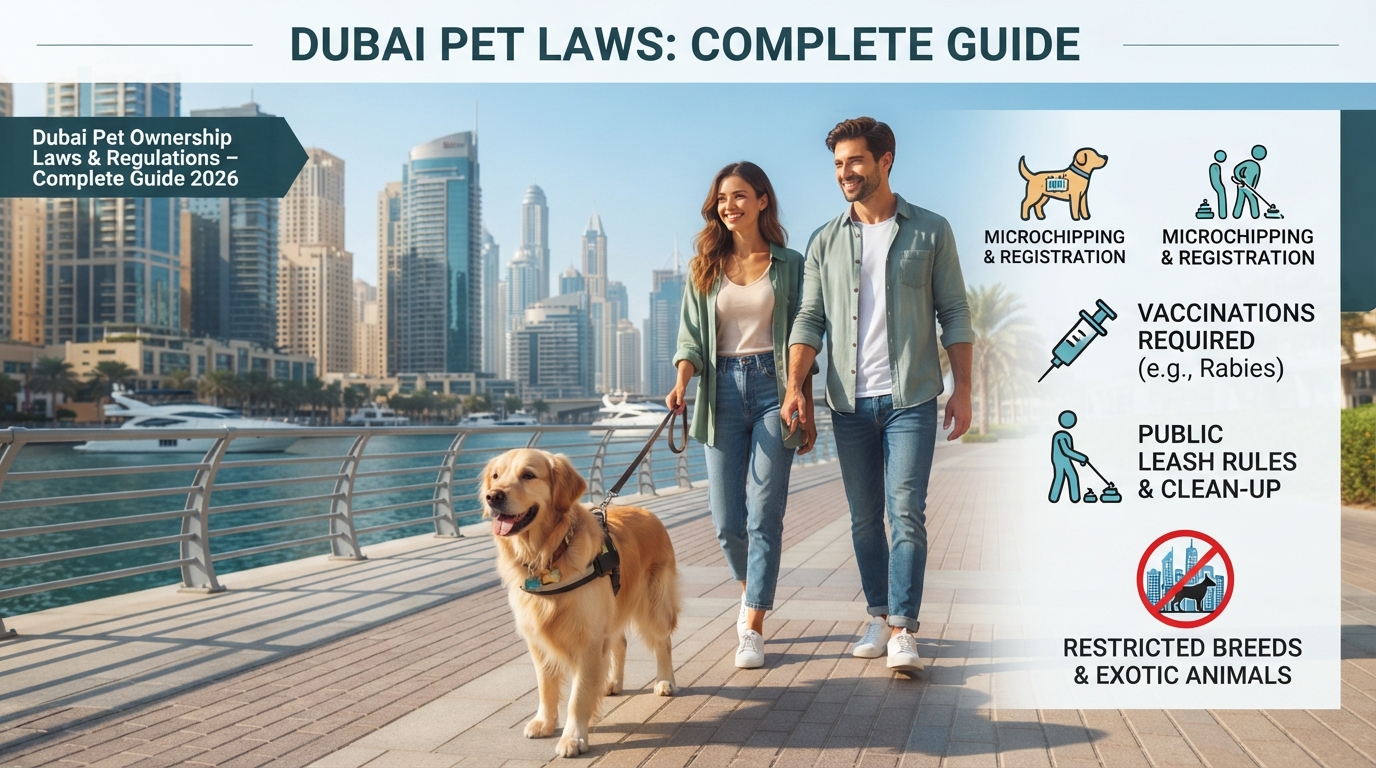
Owning a pet in Dubai comes with responsibilities that extend beyond providing food, shelter and veterinary care. Pet owners must also understand and follow the animal welfare, registration, public safety and health regulations applicable in the UAE.
Whether you are a long-term resident, a new expatriate or someone considering adopting a dog or cat, understanding the rules can help you avoid penalties and ensure your pet is properly cared for.
Dubai has introduced regulations covering pet ownership, animal identification, veterinary healthcare, public behaviour and the operation of animal-related businesses.
Here is a practical guide to the important pet ownership laws and regulations in Dubai.
1. Pet Registration and Ownership Licensing
Pet owners should ensure that their animals are registered with the relevant authorities and comply with applicable licensing requirements.
Dubai Law No. 5 of 2025 Concerning Public Health in the Emirate of Dubai includes specific provisions relating to animal health and ownership.
Article 27 addresses:
- Obtaining the required pet ownership licence.
- Registering and identifying animals.
- Obtaining permits for regulated animal-related activities.
- Preventing activities that endanger animal health.
The law also gives the responsible authorities powers to regulate the types and numbers of animals requiring registration or ownership permits.
Pet owners should contact Dubai Municipality or an authorised veterinary provider to confirm the current registration procedure for their animal.
2. Microchipping and Identification
Microchipping helps authorities and veterinary professionals identify animals and reconnect lost pets with their owners.
A microchip contains a unique identification number that can be scanned by compatible equipment.
Pet owners should:
- Ensure their dog or cat has the required microchip.
- Keep the microchip details up to date.
- Ensure identification information matches their veterinary records.
- Update contact information when changing telephone numbers or addresses.
A collar with an identification tag is also useful, particularly when walking dogs in public areas.
3. Vaccination Requirements
Vaccination is an essential part of responsible pet ownership.
Dogs and cats should receive appropriate vaccinations according to their species, age, health and veterinary advice.
Rabies vaccination is particularly important because rabies is a serious zoonotic disease.
Pet owners should maintain accurate vaccination records and follow their veterinarian’s recommended schedule.
Vaccination requirements may also differ when importing or exporting animals, so owners planning international travel should check the relevant government requirements.
4. Rules for Walking Dogs in Public
Dogs must be controlled when taken into public places.
Under applicable UAE legislation and Dubai regulations, owners should observe the following precautions:
- Keep dogs on a suitable leash in public areas.
- Maintain control of the animal at all times.
- Prevent dogs from disturbing or threatening other people.
- Clean up after pets.
- Respect restrictions on access to particular public areas.
- Follow the rules of designated dog parks and pet-friendly venues.
Do not assume that every public park, beach, shopping area or residential community permits dogs.
Always check the specific rules before visiting.
5. Dangerous Dog Breeds and Restricted Animals
The UAE has specific legislation governing the ownership of dangerous animals.
Federal Law No. 22 of 2016 regulates the possession of dangerous animals, while its executive regulations address dog licensing and restrictions on specified dangerous breeds.
The legislation restricts private ownership, trade and breeding of dogs included in the prohibited categories.
Pet owners should consult the official legal annexes rather than relying on informal breed lists circulating online.
Private ownership of certain wild, dangerous and exotic animals is also prohibited, subject to the exceptions provided by law for authorised establishments.
6. Animal Welfare and Responsible Pet Care
Animal welfare is an important part of UAE legislation.
Federal Law No. 16 of 2007 concerning the protection of animals establishes principles relating to the humane treatment and care of animals.
Owners must provide appropriate:
- Food and clean drinking water.
- Shelter and suitable living conditions.
- Veterinary attention.
- Protection from unnecessary suffering.
- Exercise and species-appropriate care.
Animals should not be abandoned, neglected or exposed to conditions that threaten their health and safety.
Dubai Law No. 5 of 2025 also establishes obligations for animal keepers, including appropriate feeding, housing, identification and care.
7. Rules for Keeping Pets in Residential Buildings
Living in an apartment or villa does not automatically mean every type of pet is permitted.
Pet owners should review their tenancy agreement, building regulations and residential community rules.
Some communities may have additional requirements concerning:
- The number and types of permitted pets.
- Registration with the community management.
- Leash requirements in shared spaces.
- Cleaning up after pets.
- Use of lifts and common facilities.
- Noise and nuisance management.
- Access to landscaped areas and swimming pools.
For example, Emaar Community Management publishes pet-related guidelines requiring owners to keep pets controlled and clean up after them in shared areas.
Before bringing a pet into a rented property, confirm the applicable rules with your landlord or property management company.
8. Taking Pets to Restaurants, Hotels and Public Venues
Not every restaurant, hotel, shopping centre or public venue in Dubai permits animals.
Pet-friendly access depends on the venue’s policy and applicable health and safety requirements.
Before visiting:
- Contact the establishment.
- Confirm whether dogs, cats or other animals are accepted.
- Ask whether access is limited to outdoor seating.
- Check whether pets must remain in carriers or on leads.
- Follow staff instructions.
A venue that accepts pets on its terrace may not allow them inside its dining areas.
9. Importing and Exporting Pets from Dubai
Residents moving to or from Dubai must follow UAE veterinary and customs procedures.
Depending on the country of origin or destination, requirements can include:
- Microchipping.
- Valid vaccinations.
- Veterinary health certificates.
- Import or export permits.
- Rabies antibody testing.
- Parasite treatments.
- Quarantine arrangements.
The UAE Ministry of Climate Change and Environment (MOCCAE) provides official information and online services for pet import and export procedures.
Official website: https://www.moccae.gov.ae/
10. Reporting Animal Abuse or Neglect
Animal abuse and neglect should be reported to the appropriate authorities.
If you witness suspected animal cruelty, dangerous neglect or an animal in immediate danger, contact the relevant police or municipal authority.
Dubai Municipality’s Veterinary Services Section is responsible for animal health and welfare services and monitoring veterinary establishments.
Official website: https://www.dm.gov.ae/
11. Penalties for Violating Pet Ownership Regulations
Failure to comply with animal welfare and ownership regulations can result in administrative or legal consequences.
Penalties depend on the specific offence and applicable legislation.
Potential consequences include:
- Financial fines.
- Seizure or confiscation of animals where legally authorised.
- Suspension or cancellation of permits.
- Legal proceedings.
- Additional penalties for serious violations.
The UAE’s dangerous animal legislation provides particularly substantial penalties for specified offences.
Owners should consult the actual legislation rather than relying on generalised online claims about fine amounts.
12. Pet Ownership Checklist for Dubai Residents
Before bringing a pet home, make sure you have considered the following:
- Check whether the animal is permitted under applicable regulations.
- Confirm your landlord or community’s pet policy.
- Arrange appropriate veterinary care.
- Complete required microchipping and registration.
- Maintain vaccination records.
- Use a leash and suitable identification when walking dogs.
- Provide appropriate food, shelter and exercise.
- Clean up after your pet in public spaces.
- Understand the rules for travelling with your pet.
- Keep your contact details updated with the relevant registration records.
Frequently Asked Questions
Do dogs need to be registered in Dubai?
Dogs are subject to licensing and registration requirements under applicable UAE and Dubai legislation. Owners should confirm the current procedure with Dubai Municipality or an authorised veterinary provider.
Are dogs allowed in Dubai parks?
Access depends on the individual park and its regulations. Some designated dog parks allow dogs to exercise and play, while other public parks restrict animal access.
Can I own an exotic pet in Dubai?
Private ownership of certain wild, dangerous and exotic animals is prohibited under UAE law. Only authorised establishments may keep specified animals, subject to legal requirements.
Can I take my dog to a restaurant in Dubai?
Some restaurants welcome dogs, particularly in designated outdoor areas. Always confirm the establishment’s current policy before visiting.
Are pets allowed in rented apartments?
This depends on the property agreement, landlord and applicable community rules. Check these conditions before acquiring a pet.
Conclusion
Understanding Dubai’s pet ownership laws is essential for anyone keeping a dog, cat or other companion animal.
Registration, identification, vaccination, animal welfare and responsible public behaviour are important parts of pet ownership.
Regulations can change, so residents should consult official government sources when checking specific legal requirements.
Responsible pet ownership helps protect animals while supporting a cleaner, safer and more pet-conscious community.
Contributed by GuestPosts.biz