


The Science Behind the Human–Animal Bond: Why We Develop Deep Emotional Connections with Animals
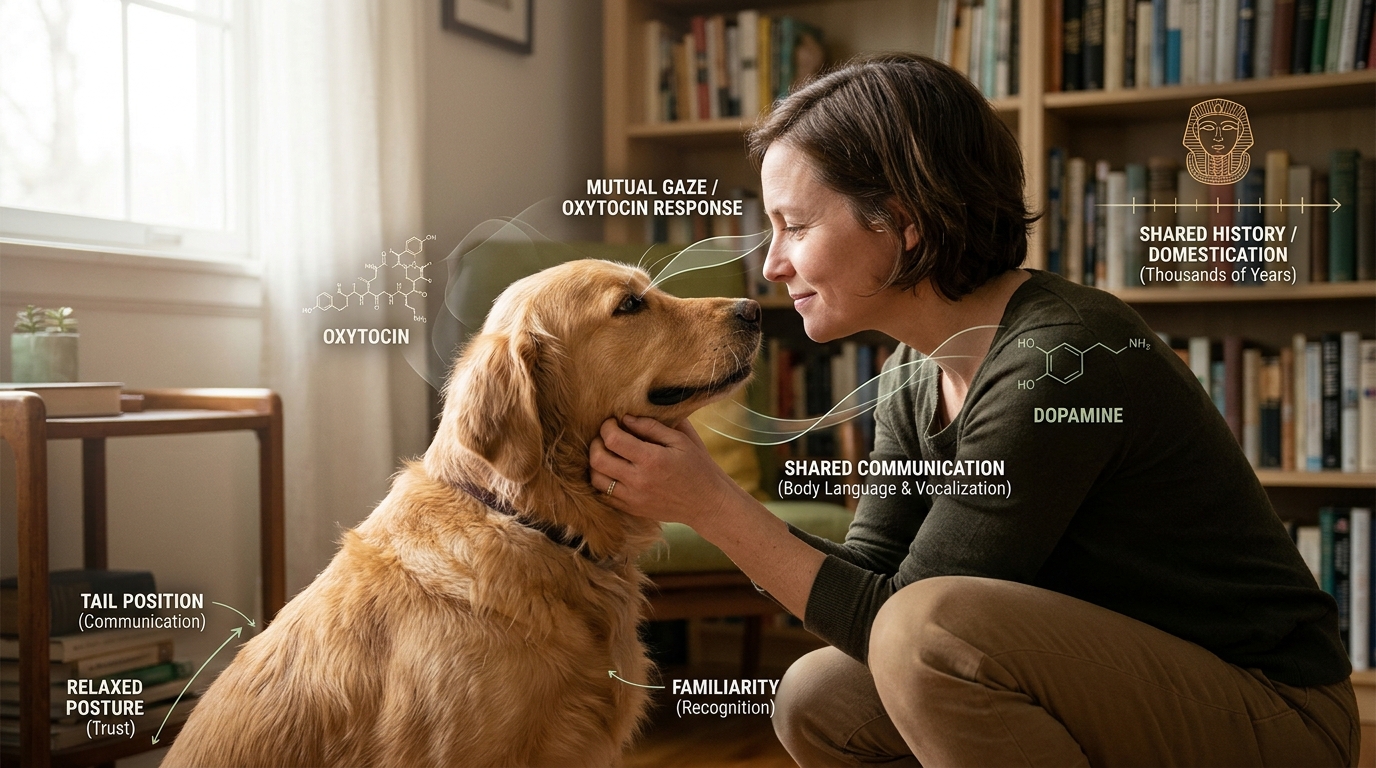
Why does a dog become so excited when its owner returns home? Why does a cat choose to sleep beside a particular person? And why can the loss of a beloved pet feel like losing a member of the family?
The relationship between humans and animals is more than simple companionship. It involves behaviour, communication, emotional responses and thousands of years of shared history.
Scientists have studied the human–animal bond to understand why people form such strong attachments to pets and how interacting with animals may influence our emotional and social wellbeing.
Here is a closer look at the science behind this special relationship.
1. A Relationship That Began Thousands of Years Ago
Humans and animals have shared relationships for thousands of years.
Dogs were among the first animals to be domesticated. Over generations, they became companions and working partners, helping people with hunting, protection, herding and other activities.
Cats also developed close relationships with human communities, particularly as agriculture created environments where rodents were attracted to stored food.
Over time, many animals moved from working roles into family homes.
Today, dogs and cats are among the most common companion animals worldwide. Their ability to live alongside people, respond to human behaviour and develop familiar routines helps explain why these relationships can become so meaningful.
2. The Role of Oxytocin in Human–Animal Interaction
Oxytocin is a hormone and signalling molecule involved in several biological processes, including social bonding and aspects of maternal behaviour.
Research has explored how positive interactions between people and dogs may be associated with changes in oxytocin levels.
For example, some studies have found associations between mutual gaze and oxytocin responses in human–dog interactions. This has contributed to scientific interest in how social relationships between different species develop.
However, oxytocin is not a simple measure of love, and the human–animal bond cannot be explained by one hormone alone.
The relationship also involves learning, familiarity, behaviour, individual temperament and the experiences shared between an animal and its caregiver.
3. Pets Can Provide a Sense of Emotional Comfort
Many owners find comfort in spending time with their pets.
A familiar animal may offer a reassuring presence during difficult or stressful periods. Feeding, grooming, walking or sitting quietly with a pet can also create a welcome break from everyday pressures.
Some research has examined links between human–animal interaction and stress-related responses, including changes in heart rate, blood pressure and stress hormones.
The findings vary depending on the individual, the animal and the circumstances. Pets should not be considered a replacement for professional mental-health care, but companionship can be meaningful for many people.
4. How Animals Communicate with Humans
Dogs and cats communicate through a combination of body language, sounds, movement and behaviour.
Over time, owners become familiar with their pet’s individual communication style.
How dogs communicate
Dogs use:
- Tail position and movement
- Ear position
- Facial expressions
- Body posture
- Barking, whining and growling
- Eye contact and movement
- Changes in activity and behaviour
A wagging tail does not always mean a dog is happy. Its overall body language and the situation must be considered.
How cats communicate
Cats communicate through:
- Tail position
- Ear movement
- Purring and vocalisation
- Slow blinking
- Body posture
- Rubbing against people or objects
- Changes in proximity and interaction
A cat that approaches and rubs against someone may be showing familiarity or seeking interaction, but individual behaviour varies.
Learning to recognise these signals helps owners respond more appropriately to their pets.
5. Why Pets Recognise Their Owners
Animals can learn to recognise familiar people through several senses.
Dogs, for example, are particularly skilled at using scent. They can also recognise familiar voices, routines and visual cues.
Cats can learn to distinguish familiar voices and recognise people associated with food, comfort and positive experiences.
Recognition is strengthened through repeated interaction. Pets learn who feeds them, plays with them, provides care and shares their everyday environment.
This familiarity helps create predictable relationships and can contribute to feelings of security.
6. The Bond Between Pets and Children
Growing up with an animal can give children opportunities to learn about relationships, responsibility and empathy.
A child who helps care for a pet, under adult supervision, may learn to recognise another living being’s needs and boundaries.
Pets can also become companions during play and everyday family activities.
However, children should be taught how to interact safely with animals. They should never be left unsupervised with a pet, particularly when the animal is eating, sleeping, frightened or showing signs of discomfort.
Adults must remain responsible for the animal’s welfare.
7. Why Dogs and Cats Form Different Relationships with People
Dogs and cats can both develop strong relationships with humans, but their behaviour and social preferences are not identical.
Dogs
Many dogs are highly responsive to human gestures, voices and social cues. They often enjoy shared activities such as walking, training and play.
Their social behaviour varies by breed, individual temperament, upbringing and experience.
Cats
Cats often show attachment in more subtle ways. They may follow familiar people, rest nearby, seek attention or choose to spend time in the same room.
Some cats enjoy frequent physical affection, while others prefer interaction on their own terms.
Neither style of companionship is better. Understanding each animal’s preferences is part of building a healthy relationship.
8. The Human–Animal Bond and Mental Wellbeing
The bond with a pet can influence everyday life in several ways.
Companionship: Animals can provide a familiar presence and opportunities for affection.
Routine: Feeding, walking and caring for pets can create structure in daily life.
Social connection: Pets can bring people together through walks, community activities and shared interests.
Positive experiences: Play, interaction and shared routines can create enjoyable moments.
Responsibility: Caring for an animal encourages owners to consider another living being’s needs.
Not everyone experiences these benefits in the same way. Pet ownership can also bring stress, financial responsibilities and emotional challenges, particularly when an animal becomes unwell or reaches the end of its life.
9. Why Losing a Pet Can Be So Painful
The death of a pet can cause genuine grief.
Animals become part of everyday life. Owners may share routines, milestones, holidays and years of companionship with them.
The loss can therefore leave an emotional gap in the household.
People may experience sadness, loneliness, guilt or changes in their daily routines after a pet dies. These feelings are valid, and there is no single correct way to grieve.
Support from family, friends, veterinary professionals or pet-loss support groups can help.
It is important to recognise that the human–animal bond can be deeply meaningful, even though it crosses species.
10. How to Build a Stronger Bond with Your Pet
A strong relationship develops through consistent, positive interaction.
Try these simple practices:
- Spend quality time together every day.
- Learn to recognise your pet’s body language.
- Use positive reinforcement during training.
- Provide appropriate play and enrichment.
- Respect your pet’s need for rest and personal space.
- Maintain consistent feeding and care routines.
- Arrange regular veterinary examinations.
- Avoid forcing interaction when your pet is uncomfortable.
For dogs, walks, training and scent-based activities can provide opportunities for shared experiences.
For cats, interactive play, familiar routines and comfortable resting places can help build trust.
Frequently Asked Questions
Why do humans become emotionally attached to pets?
Attachment develops through familiarity, companionship, shared experiences, caregiving and positive interactions. Biological processes associated with social bonding may also play a role.
Do dogs love their owners?
Dogs can form strong social attachments to familiar people. They may seek their company, show excitement when they return and use them as a source of security.
Do cats become emotionally attached to their owners?
Yes. Cats can form attachments to familiar caregivers, although they may express them differently from dogs.
Does petting a dog or cat reduce stress?
Some studies have found associations between positive human–animal interaction and changes in stress-related responses. Effects vary between people and animals.
Why is losing a pet so painful?
Pets can become central to everyday routines and emotional relationships. Their loss can therefore create significant grief.
Final Thoughts
The human–animal bond is a remarkable relationship shaped by biology, behaviour, trust and shared experience.
Whether it is a dog waiting by the door, a cat settling beside its owner or a small pet responding to a familiar voice, these everyday interactions can become deeply meaningful.
The strongest bonds develop through care and understanding. When we learn to respect an animal’s needs and communicate in ways it understands, we create a relationship that benefits both human and animal.
Contributed by GuestPosts.biz