


Are Pets the New Children? The Rise of Pet Parenting
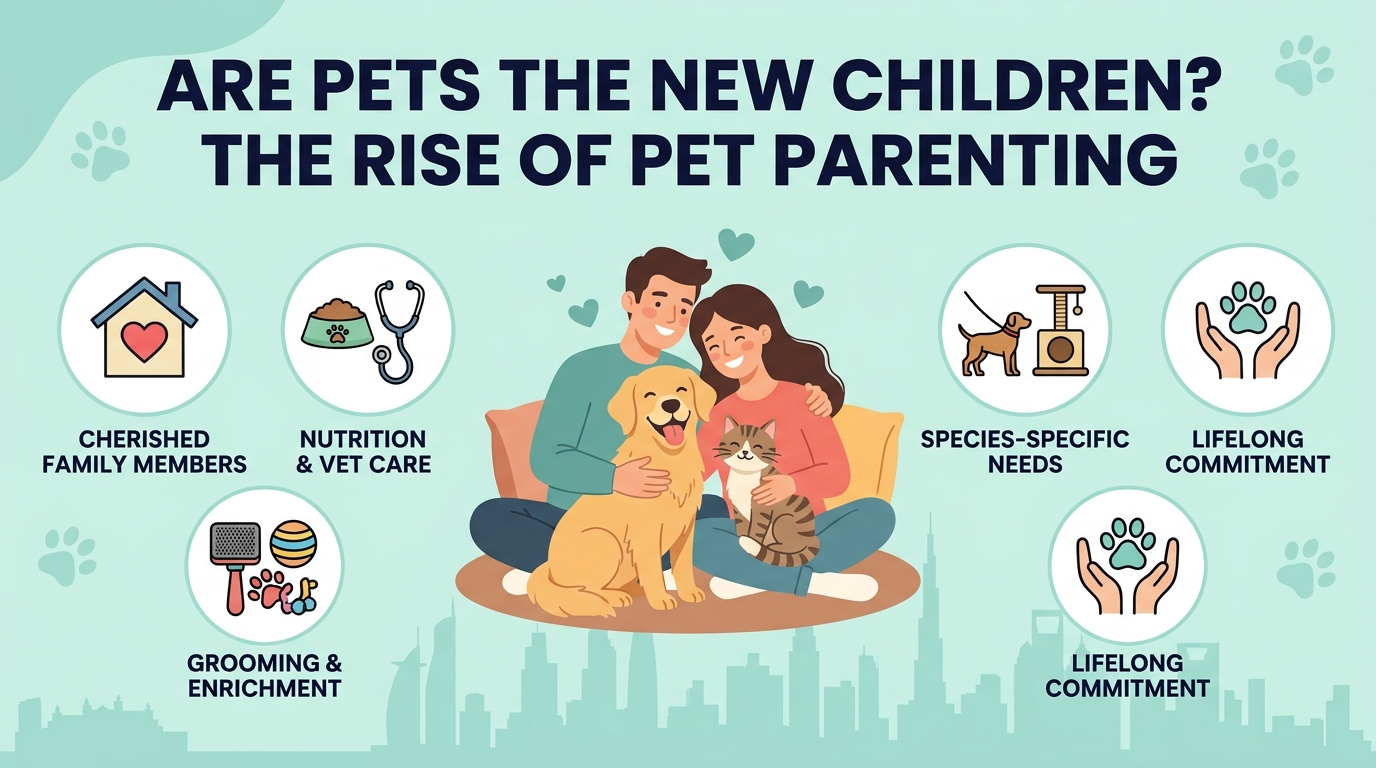
For many people, a dog or cat is no longer simply an animal living in the home. Pets have become cherished family members, included in celebrations, holidays, daily routines and important life decisions.
Some owners refer to themselves as pet parents, celebrate their animals’ birthdays, arrange professional grooming and choose homes based on whether pets are welcome.
This shift has become part of a wider change in how people think about companionship, family life and responsible animal care.
But are pets really becoming the new children? The answer is more complicated than a simple yes or no.
1. What Does Pet Parenting Mean?
Pet parenting describes an approach to animal ownership in which people see their pets as important members of the family.
Instead of viewing a pet only as a companion animal, owners may organise much of their lifestyle around its needs and wellbeing.
Pet parenting can include:
- Choosing food based on nutritional requirements
- Scheduling regular veterinary examinations
- Arranging professional grooming
- Providing training and enrichment
- Planning holidays around pet-friendly accommodation
- Celebrating birthdays and adoption anniversaries
- Creating comfortable spaces at home
- Investing in insurance or other financial protection where available
At its best, pet parenting reflects a commitment to responsible care and an understanding that animals depend on their owners.
2. Why Are More People Treating Pets Like Family?
Several social and lifestyle changes have contributed to the growing visibility of pet parenting.
Changing household structures
People live in many different family arrangements. Some live alone, some share homes with friends, and others have families with children.
For some households, a pet becomes a central part of family life and daily companionship.
Delayed parenthood and different life choices
Some adults choose to have children later, while others decide not to have children. Pets may play an important role in their lives, although pet ownership should not be treated as an equivalent replacement for raising a child.
The importance of companionship
Pets offer interaction, affection and shared routines. For people who enjoy animal companionship, these relationships can become deeply meaningful.
Social media and pet culture
Social media has made it easier to share pet stories, photographs, celebrations and everyday moments. Pet-related content has also helped create online communities around particular breeds, animal welfare and pet lifestyles.
Greater awareness of animal welfare
Many owners now place greater emphasis on nutrition, preventive veterinary care, training, enrichment and humane treatment.
This reflects a growing understanding that responsible pet ownership involves meeting an animal’s physical and behavioural needs.
3. The Rise of the Pet Economy
As people spend more on pet care and services, businesses have developed around the needs of modern pet owners.
The pet economy includes:
Premium pet food and nutrition
Owners can choose from a wide range of commercial diets, specialist formulations and veterinary-prescribed foods.
Grooming and wellness
Professional grooming, bathing, coat care and other non-clinical services are part of the regular care routine for many pets.
Veterinary services
Preventive examinations, vaccinations, diagnostics, dental treatment and specialist veterinary care help owners manage their animals’ health.
Boarding and daycare
Pet hotels, kennels, catteries and daycare facilities provide care when owners travel or need support during the day.
Pet accessories and lifestyle products
Beds, toys, carriers, clothing, feeding equipment and enrichment products are widely available.
Pet insurance and financial planning
Some owners explore insurance products to help manage unexpected veterinary expenses, subject to the terms and exclusions of each policy.
The growth of these services reflects demand from owners who want to provide appropriate care and convenience for their animals.
4. Pet Parenting in Dubai
Dubai is an interesting example of how pet ownership interacts with modern urban lifestyles.
The city has a growing range of pet-related services, including veterinary clinics, grooming salons, pet shops, boarding facilities, dog parks and pet-friendly venues.
For many residents, pet ownership involves planning around the city’s climate, accommodation rules and travel arrangements.
Pet-friendly accommodation
Residents should check landlord and building policies before renting or buying a property. Pet rules can differ between buildings, even within the same community.
Outdoor activities
Dog parks and designated pet-friendly outdoor areas provide opportunities for exercise and socialisation. During hot weather, owners should plan activities for cooler hours and protect pets from hot surfaces.
Travel and relocation
Dubai’s international population means that some owners need to arrange pet travel when moving countries or taking extended trips. This requires advance planning and compliance with destination-country requirements.
Professional pet services
Owners can access a range of services, including grooming, boarding, daycare, training and veterinary care. It is important to check provider qualifications, facility standards and the suitability of each service.
5. Is Treating a Pet Like a Child a Good Thing?
Seeing an animal as part of the family can encourage owners to invest time and resources in its welfare.
However, there is an important distinction between loving a pet and treating it as though it were human.
Dogs and cats have species-specific needs, instincts and ways of communicating. Their wellbeing depends on appropriate nutrition, exercise, social interaction, rest, training and veterinary care.
For example:
- Dogs need suitable walks, sniffing opportunities and training.
- Cats need safe hiding places, climbing opportunities and appropriate play.
- Both need diets formulated for their species.
- Both need veterinary care and environments that support their natural behaviours.
A pet’s needs should come before the owner’s desire to dress it up, take it everywhere or include it in every activity.
Good pet parenting means respecting an animal as an animal.
6. The Financial Side of Pet Parenting
Modern pet care can involve substantial costs.
Before welcoming an animal into the family, owners should consider:
- Adoption or purchase costs
- Food and treats
- Routine veterinary examinations
- Vaccinations and parasite prevention
- Grooming
- Training
- Boarding or pet sitting
- Equipment and accessories
- Emergency veterinary treatment
- Long-term care as the animal ages
The cost of caring for a pet varies by species, size, age, health and lifestyle.
Owners should prepare a realistic monthly budget and an emergency fund where possible. Choosing a pet based only on its initial cost can lead to difficulties later.
7. The Responsibilities Behind the Pet Parenting Trend
Pet parenting should be more than buying products or sharing photographs online.
A responsible pet parent must be prepared to:
- Provide suitable food and fresh water.
- Arrange regular veterinary care.
- Maintain vaccination and parasite-prevention plans.
- Provide exercise and mental stimulation.
- Train and socialise the animal appropriately.
- Respect its boundaries and natural behaviour.
- Arrange suitable care during travel.
- Make long-term provisions for illness and ageing.
Pets are living beings, not lifestyle accessories. They depend on their owners for their entire lives.
8. Pet Parenting and Animal Adoption
The rise of pet parenting can also encourage more people to consider adoption.
Animal shelters and rescue organisations work to find suitable homes for dogs and cats that have been abandoned, surrendered or rescued.
Adoption can be a rewarding way to welcome an animal into the family, but it still requires careful consideration.
Before adopting, think about your living arrangements, time commitments, financial resources, household members and the animal’s individual needs.
In Dubai, prospective adopters can explore organisations such as K9 Friends, Feline Friends and the Dubai Municipality Integrated Pet Shelter.
9. Are Pets Really Replacing Children?
For some individuals and couples, pets occupy a central family role. Others enjoy having pets alongside children, while some prefer not to own animals at all.
These choices reflect different lifestyles and personal circumstances.
However, pets and children are not interchangeable. Raising a child involves a different set of responsibilities, relationships and developmental needs. Animals also have their own species-specific requirements that cannot be understood through a human family role alone.
It is more useful to recognise that people are developing different ways of building companionship and family life.
Frequently Asked Questions
What is pet parenting?
Pet parenting is an approach to animal ownership in which people consider their pets important family members and take an active role in their health, comfort, training and wellbeing.
Why are pets increasingly treated as family members?
Companionship, changing household structures, greater awareness of animal welfare and the availability of pet services all contribute to this trend.
Is pet parenting the same as treating pets like children?
Not exactly. Pet parenting involves affection and responsibility, but animals have different biological, behavioural and social needs from children.
Is pet parenting expensive?
It can be. Food, veterinary care, grooming, boarding, training and unexpected medical expenses should all be considered before getting a pet.
What makes someone a responsible pet parent?
Providing suitable nutrition, healthcare, exercise, enrichment, training, a safe home and long-term commitment are essential parts of responsible ownership.
Final Thoughts
The rise of pet parenting reflects a wider recognition of the emotional relationships people can develop with animals.
For many households, pets are valued family members whose needs influence everyday decisions. This can be a positive development when it leads to better care, greater awareness of animal welfare and stronger commitments to responsible ownership.
Ultimately, being a good pet parent is not about how much you spend or how often you post about your animal. It is about providing a safe, healthy and loving life for a companion who depends on you.
Contributed by GuestPosts.biz